

Do you ever wonder why some people seem to command respect effortlessly while you’re still trying to prove yourself?
I spent years chasing validation from others, thinking that if I just worked harder, agreed more, and kept everyone happy, respect would follow.
It never did.
So I wrote The Art of Self-Respect to share the 25 habits that actually shifted things for me.
The core idea is that respect starts with how you treat yourself, which shapes how others respond to you.
Here are 8 lessons from the book:
1. Slow down a fraction.
When we rush, we signal that we’re on edge. We look like someone who doesn’t trust that things will work out.
Slowing your movements, your speech, and your breathing does something strange to your self-perception. You become more in control.
Others sense this, too. They calm down around you, and that commands authority.
2. Stop being so available.
If you respond to every text instantly and show up for everyone without hesitation, you’re communicating something.
You’re saying your time isn’t valuable. You’re saying you don’t have much going on.
Scarcity creates value. This applies to your presence, too.
Have things going on in your life (genuinely), and people will treat your time like it matters.
3. Expose some of your flaws.
Most people are terrified of looking imperfect. They hide their mistakes and pretend they’ve got it all figured out.
This always made me forgettable.
When you’re willing to admit a past failure or share something that makes you a little uncomfortable, people lean in. They see a human being, not a cardboard cut-out.
Vulnerability, done right, builds trust and connection.
4. Refuse to tolerate drama.
Arguments are rarely rational. They emerge from a childish need to be right, and they drain everyone involved.
If someone brings you prolonged negativity or disrespects you publicly, staying calm is your first move. Reacting aggressively only reveals your insecurities.
Sometimes the most powerful response is simply leaving the room without another word.
Your absence will be felt, and your boundaries will be understood.
5. Stop taking things personally.
We all have an image of who we think we are, and we defend it like it’s something we can touch.
It is not. It’s just a bundle of thoughts you’ve collected over the years.
When you realise there’s nothing solid to protect, you stop getting triggered by every perceived slight. You become lighter, more playful, and far less exhausting to be around.
People respect those who can laugh at themselves and let things roll off.
6. Stop being so nice.
Fake niceness is a form of manipulation. You’re pleasant because you want something in return, usually approval or safety from conflict.
People can sense this, even if they can’t name it. It doesn’t feel authentic because it isn’t.
Be kind when you mean it. Drop the forced smile when you don’t.
Authenticity, even when it’s a little uncomfortable, commands more respect than any performance.
7. Want it, but don’t need it.
It took me decades to realise that neediness pushes people away.
Whether it’s a job, a relationship, or a sale, clinging to a specific outcome signals that you lack options.
You can absolutely want things. Goals are good. But your happiness shouldn’t depend on any single thing working out.
When you hold outcomes loosely, you relax. You perform better. And paradoxically, you become more likely to get what you want.
(It’s weirdly counterintuitive, but it works.)
8. Stop seeking approval.
This is the big one.
When your happiness depends on other people’s thoughts and actions, you’re in a precarious position. You feel good when they’re pleased, and you crumble when they’re not.
Seeking validation signals insecurity. People sense it, and it loses you respect.
Focus instead on being useful and genuine. When you stop trying to impress and start bringing real value, admiration becomes a by-product rather than a goal.
These ideas work because they feed a very real loop.
When you act like someone who respects themselves, you start to see yourself that way, and then you take more actions that reflect that self-image.
And round and round.
It’s a spiral that can go up or down depending on your habits.
If any of this landed, the book goes much deeper:
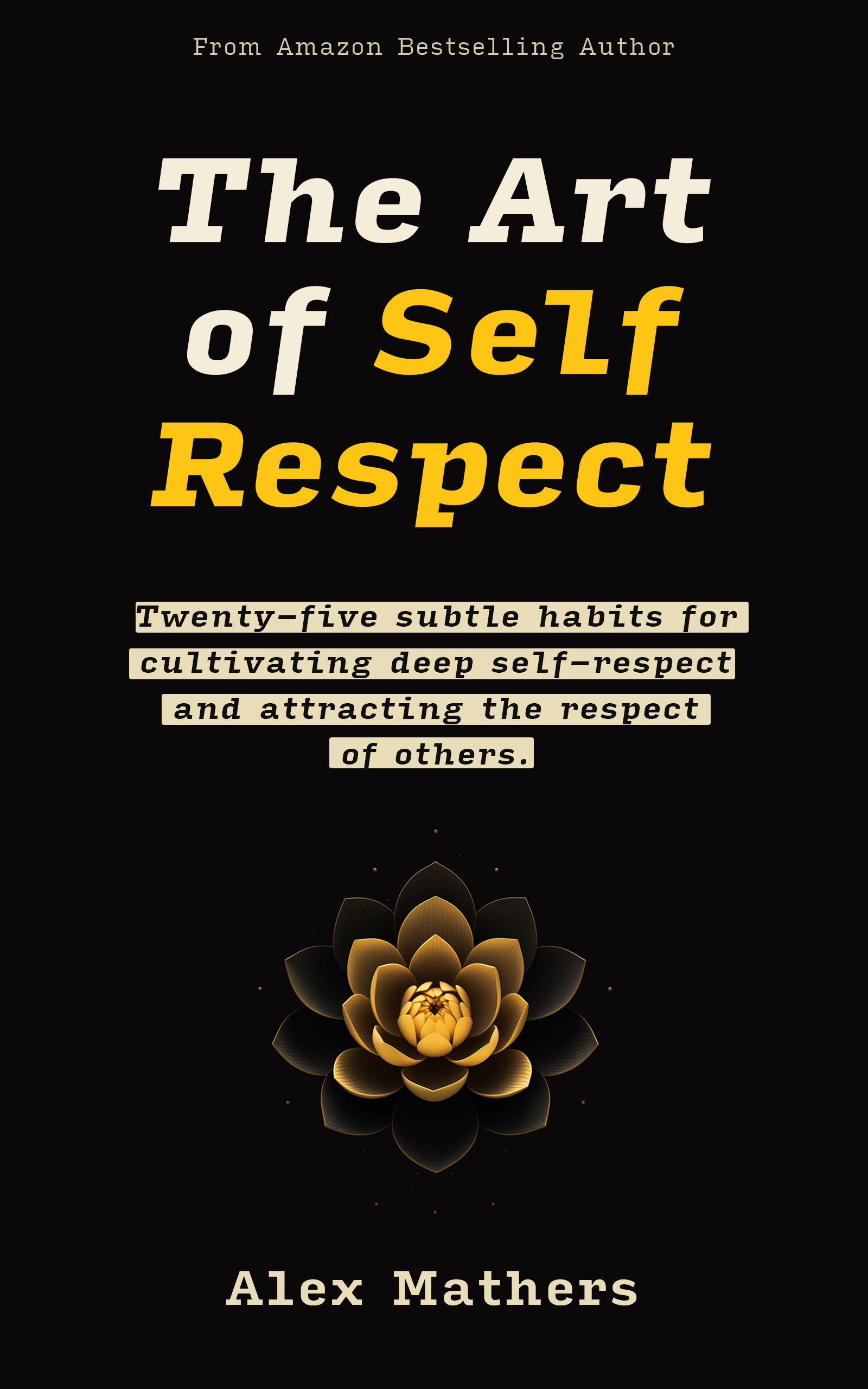
When you grab a copy of the book here today, you’ll get the full book in every digital format plus three bonus guides I don’t share anywhere else, including The 12 Habits of Mentally Strong People and Five Secret Truths About Uncommon Happiness.
Grab The Art of Self-Respect special bonus bundle here.
Alex
And join us as a paying subscriber here for access to more bonuses and to support my writing:
yeesh...it would do me good to read a whole book on #7 :)