


Laziness isn’t a personality trait.
It’s a label we apply to an act that appears to fall short of a particular activity level. Many of us call ourselves lazy. But this holds you back.
Here’s what you need to know to be less ‘lazy…’
1. You’re not lazy.
Just because you’ve been doing things that might be described as ‘lazy’ doesn’t mean you are a lazy person.
Who we are and what we do are very separate things.
Don’t define yourself by your actions.
If actions are the problem, those need addressing.
But if we make it about us, we lose hope.
Who we think we are can’t change - but we can change what we decide to do.
And actions will ultimately shift our perceived self-image.
2. You are likely sabotaging your energy levels.
Becoming motivated isn’t all about mindset.
And we aren’t supposed to lack energy. Humans are highly energised by default.
Most of it has to do with optimising your energy levels.
Most people who come to me and tell me they’re lazy are doing all kinds of shit limiting their energy - often without them even realising it. Here are some examples:
Too much fake dopamine, like playing video games, eating excessive sugar and watching porn.
This fries your dopamine sensors, making it difficult to be motivated for everyday things like writing and creating.
Eating processed food, sugar and wheat.
Sitting around all day and rarely exercising.
Eating food you are intolerant to, like gluten, which slows you.
Get real about the changes you need to make in your life.
Identify those things you think could be limiting your energy and take small steps to eradicate them so your energy and motivation return.
3. You must create momentum.
The most productive people who create in huge quantities tend to be masters at creating momentum.
Think about how you ride a bike.
At the start, turning the pedals and maintaining balance can be a push. It’s not easy.
After some wheel turns, momentum is on your side, balance becomes easy, and you’re flying.
The same applies to productivity and getting a handle on your ‘laziness.’
To create momentum, you must be willing to deal with the initial push, which might be felt as boredom or resistance.
You either sit with the boredom and wait for inspiration to strike, which can work.
Or you adopt a warrior’s pose, dive in head first and create momentum through gritted teeth.
Find the way that works for you and get moving.
Motion creates results.
4. It’s not you; it’s your system.
When it comes to being productive, most of us focus way too much on ourselves. We say:
‘Oh, I don’t think I have enough self-belief to do this, and so I’ll procrastinate.’
It’s not about you, num nuts.
You need a better, more appealing system.
We all have a system for the results we’re creating in our lives. It’s just that yours can be less than optimal.
If you aren’t getting stuff done, what is a system you can build that would ensure you do the right things?
Does it mean waking up earlier and reading for an hour before writing?
Does it mean getting an accountability partner? Does it mean exercising in the morning before working?
Your purpose will come into this too.
Do you have a clear reason for doing what you do?
Forget yourself and focus on creating a system that works for you.
That’s how to cure laziness…
And win.
There’s one thing stopping most from being more authentically energised: internal self-respect.
I know because I struggled to make money in my twenties, and couldn’t figure out the bottleneck until I realised it was a self-identity issue.
Learn the 25 little daily habits I use that reinforce a powerful identity of self-respect in achievable daily steps.
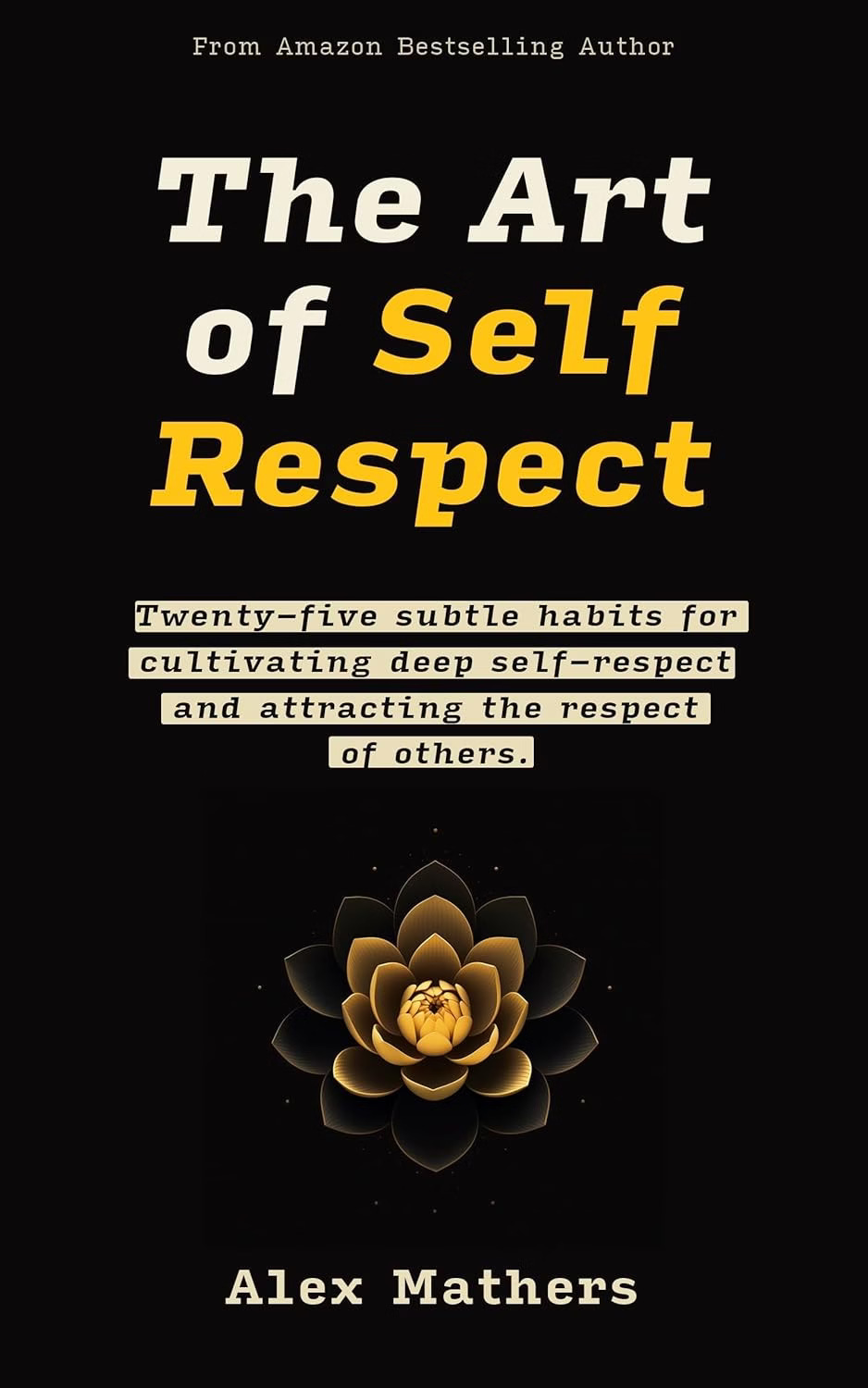
My book shows you how (comes with 3 awesome bonuses):
Get the Art of Self Respect book bundle here.
“One of the best self-help books I’ve read in a long time. Alex exposes, in a clear and concise manner, the behaviors we should study, practice, and adopt to develop better self-respect. This, in turn, leads to earning respect from others.” - Jean Pierre
—
Clear and precise! Thanks for writing this.
The system part is really important. and building a system in that state of consciousness is really hard!
Always reliable