

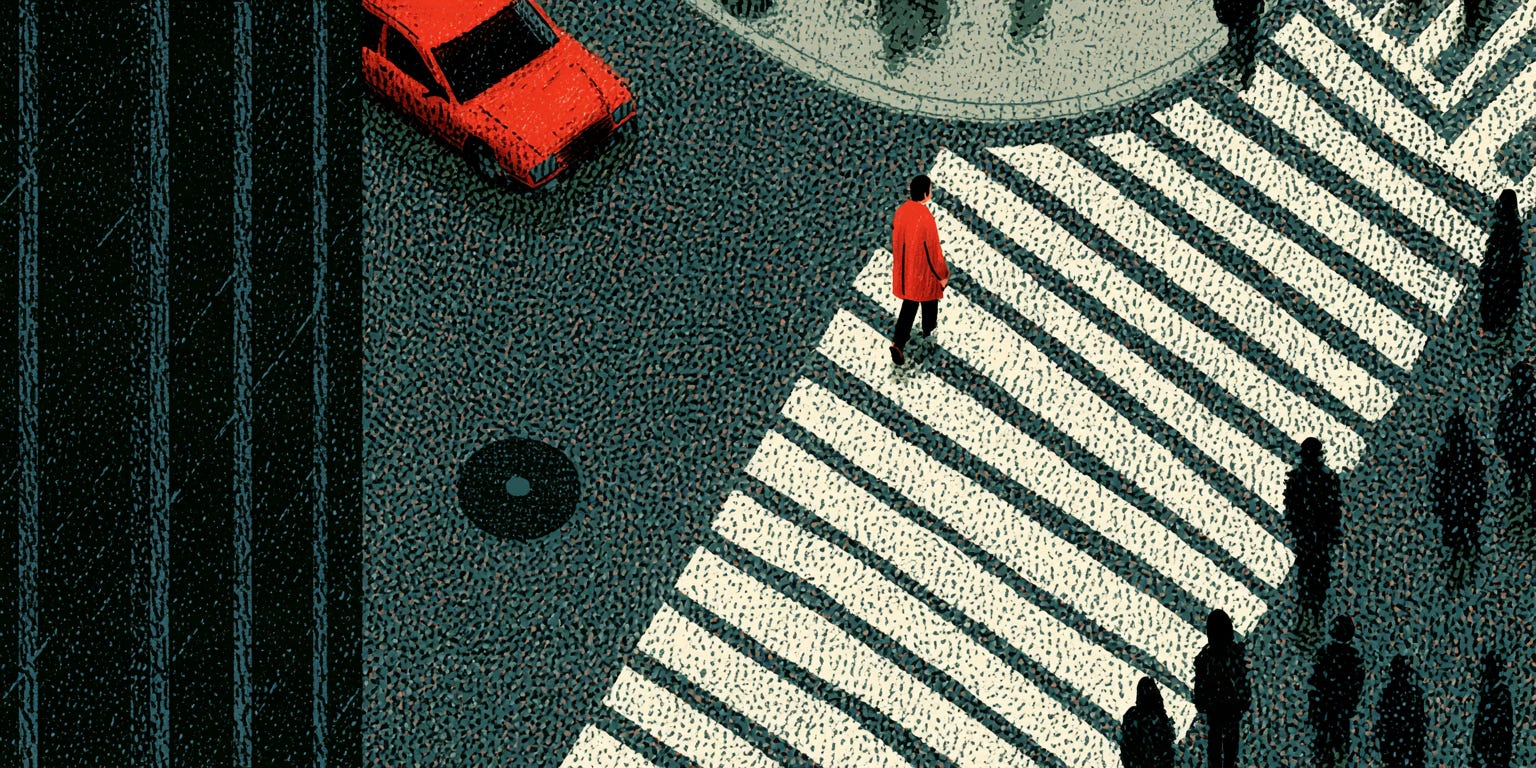
I’ve said this to myself before.
I’ve said it many times.
Life can get dull.
It can feel like we’re going round and round in circles, paying bills, earning more to pay those bills, and no sign of this loop shifting.
I’d wager about 85% of adults think this thought frequently.
But notice how this thought makes you feel.
It diminishes us and emphasises the reality of this real-world horror movie.
It took me years to notice the divide.
Yes, the divide.
A very clear divide separates two mental approaches to work and life.
It took me some time to figure out how it worked, but over time it became clear.
And yet it requires continual reminding.
The first approach is the Outside-in approach.
Our feelings and subsequent behaviours are determined by our life situations.
Hard day at work? That’s why you feel drained.
Rainy day? That’s why you feel run down.
Some dick cut you off in traffic? That’s why you feel agitated right now.
Our inside experience is defined by our outside.
Most of the world thinks like this.
And they are dead wrong.
The second mental approach changed my life.
I don’t always think this way, but when I do, my creativity and performance lifts and expands like bread in the oven.
The second approach is the Inside-out approach.
Our thoughts create our reality.
Our outside is defined by our inside.
How can this be so? This some woo-woo magic nonsense, Alex - what do you mean?
Let’s use an example to show you how it works:
Jake’s boss fired him today. Jake was devastated and spent the next two weeks depressed.
In the next office, Sam’s boss also fired him today. But Sam was elated. He was going to quit but had held it off.
Being fired gave him the opportunity he needed to take action and find the job of his dreams.
Same external influence. Two entirely different emotional experiences.
Sam may have yet to consciously understand the two mental approaches at play. But his example demonstrates how the way we think about an event determines how we feel.
He felt good.
Jake felt terrible.
See how it’s all perception?
Our thoughts determine how we feel, and this colours our experience.
It’s like a new filter has been placed over our eyes.
Some might say our thoughts have the power to move mountains.
When we complain in our minds about how tedious everything is, what happens?
We feel the feeling of this thought.
And our feelings inform what our reality is like.
If we think we’re on a hamster wheel, we are literally creating a belief about reality that we - as humans - are obliged to confirm as real.
Our attention adapts itself to confirming the truth of this thought.
And so we inadvertently construct the reality we are complaining about.
External stimulus > Thought about it > Feeling about it > Reality conforms to the feeling.
Life gets better when we see the loop we create.
Seeing it can be all it takes to go from stuck and grey to vibrant and bright orange.
Act as if life is a wild, exciting and buzzing adventure.
You will soon feel the reality of this.
Your feeling will reinforce the thought, and the positive loop emerges.
You’re free to leave the hamster wheel any time you like.
What will you create instead?
Feel stressed more than you believe you should?
It’s time to return to your true, badass identity. Most stress comes from not respecting yourself enough.
I struggled with anxiety in my twenties, until I learned a handful of habits that shifted the way I viewed myself. It was surprisingly fast.
When I learned to move past my insecure thoughts and carve a healthy and confident self-identity, real, genuine calm and satisfaction poured into my life. It was weird, but made sense.
Learn the 25 little daily habits I use that reinforce a powerful identity of self-respect in achievable daily steps.
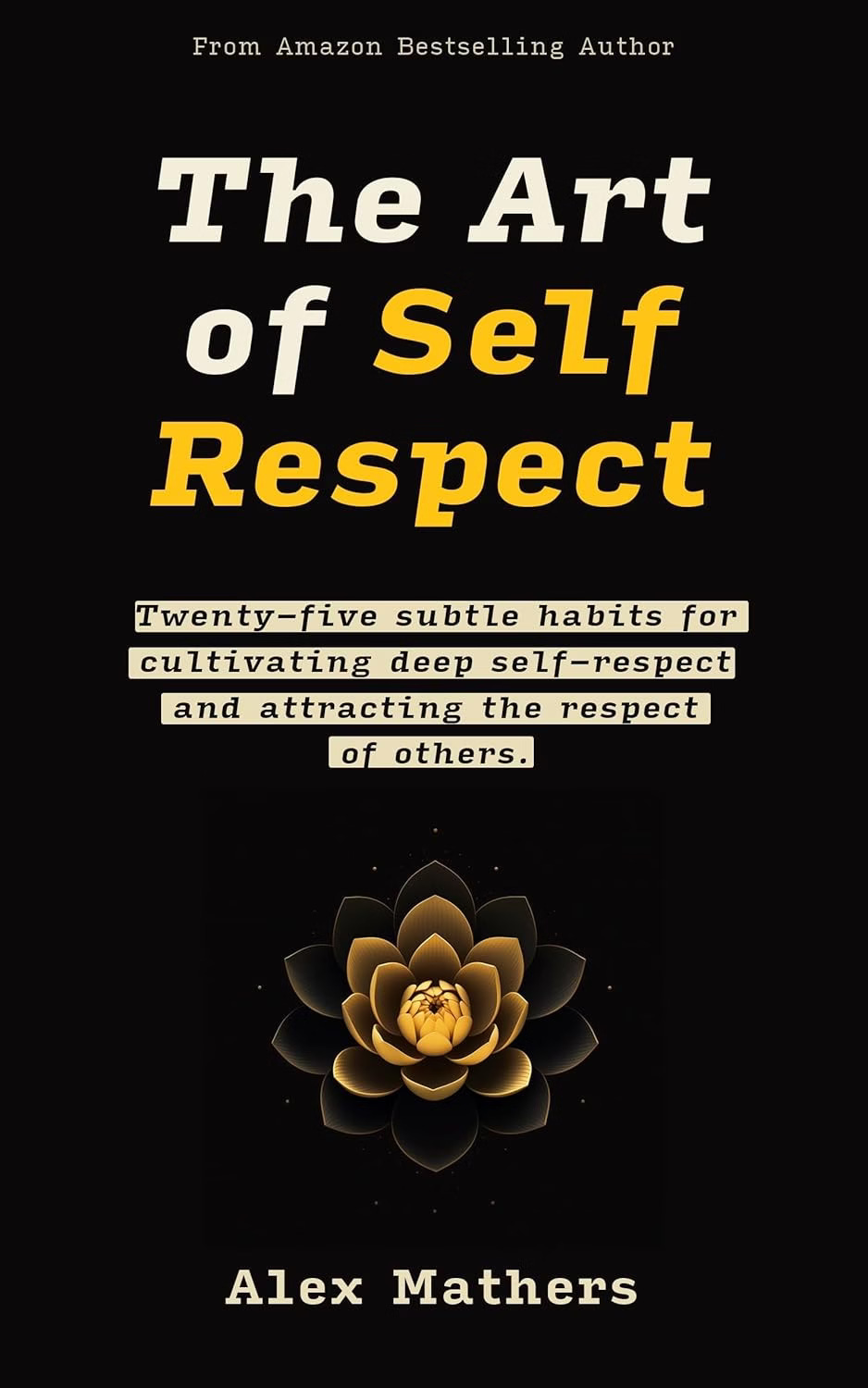
My book shows you how (comes with 3 awesome bonuses):
Get the Art of Self Respect book bundle here.
“One of the best self-help books I’ve read in a long time. Alex exposes, in a clear and concise manner, the behaviors we should study, practice, and adopt to develop better self-respect. This, in turn, leads to earning respect from others.” - Jean Pierre
—