

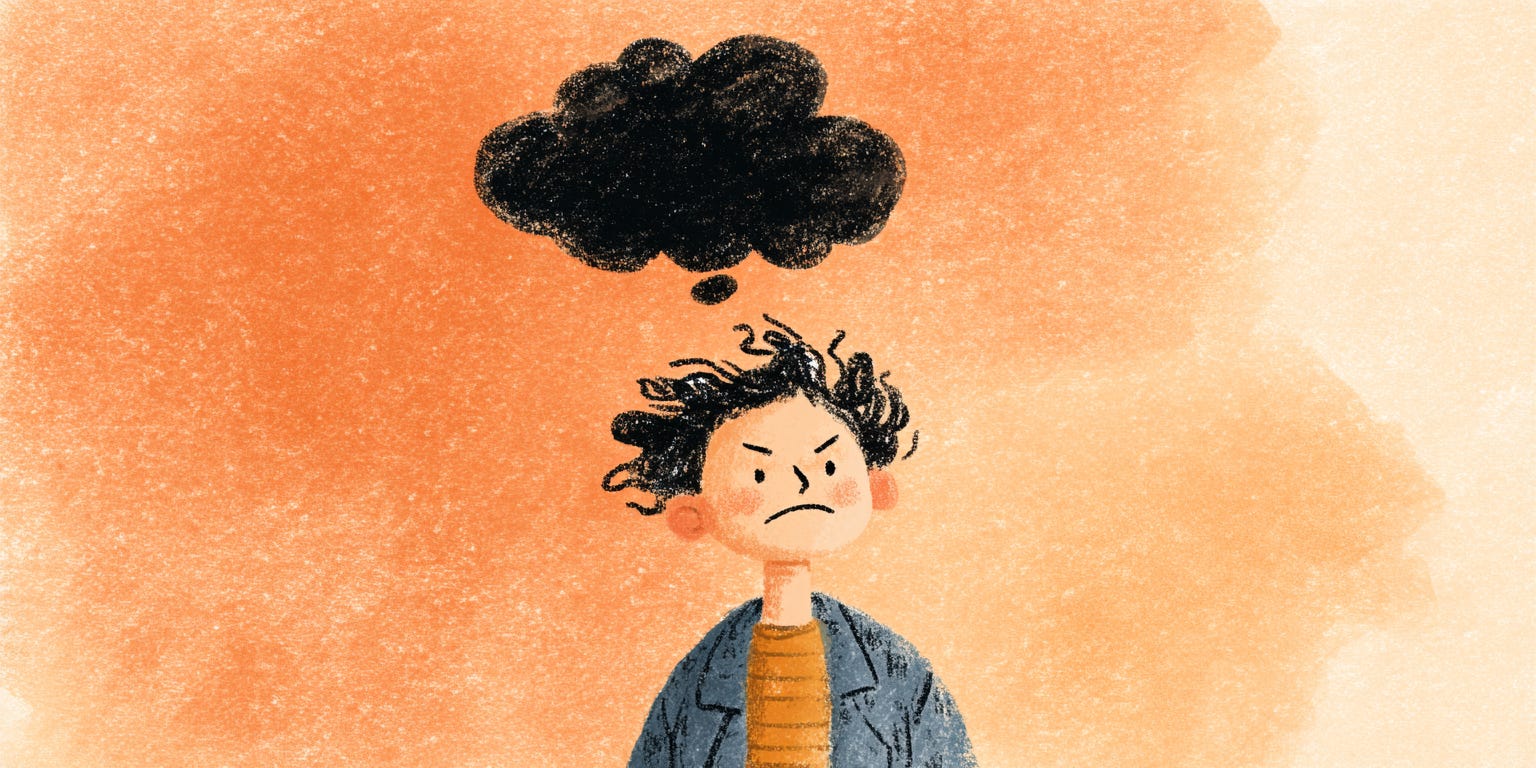
They said it again.
A ripple of rage runs up your chest like a misplaced hamster.
Then it spreads to your neck and arms.
Your eyes dilate like you just took a lick of meth.
You could crush a skull right now.
Or maybe you’re angry at yourself again.
You keep doing it, and you said you wouldn’t, and now here you are feeling stupid. You could happily throw the table across the room.
Here’s the thing about anger. Regardless of where you think you might have picked up your rage, what we’re seeing when you feel angry is a response to a thought.
You don’t need to dive into your past and make friends with your inner child to move past anger.
Anger is simply an angry thought arising in the moment and acted on right now. And so, when we experience anger frequently, we’re seeing a pattern of thinking. Something that returns.
Over and over. And over. Anger is, in this way, a habit.
It has nothing to do with you as a person. You are not an angry person, so quit thinking that shit.
You have angry thoughts to which you’ve gotten into the habit of responding. You never take a breath.
You don’t create a sacred gap between the irritating vision in your mind’s eye and your compulsion to slam fists and yell.
. . .
When we see that the emotion of anger is the flip side of an angry thought, we’re a step closer to something magical.
A particular kind of control is within reach again. We’re the ones directing the show.
Not your irritating housemate. Not the dog who won’t stop barking. Not the impending bill.
We can choose to breathe and let go if the anger doesn’t serve. Or we can use it.
We can transmogrify into the battle-hardened outline of a warrior with a lust for blood.
Using anger in the form of positive aggression isn’t something many psychologists or gurus often talk about.
But this is how we can turn the excited energy that sits at the base of anger into a positive.
Many people have an angry thought and are sucked into the thought out of a bad habit.
They are seemingly controlled by their circumstances or their horrifying pasts, but really they are governed by their inability to let go of angry thoughts. They are a loose canon. They act out in violence without pause, like a child.
This is what it means to be controlled by anger.
But you’re different. While much of the world fear anger and cowers from it like pathetic, limp unwatered sunflowers, you have found a way to make anger work for you.
First of all, you must develop the gap.
The space between angry thoughts and the need to act the angry thought out. You must breathe.
When you nurture a large enough gap over time, you will rarely fall into the trap of being carried away in a rage.
That’s dumb and will put you and those around you in danger.
It takes awareness and continually redirecting your attention away from your mind and towards consciousness. Once you’re better at this, you can start dipping into those energy resources more practically and empoweringly. The wise use their aggression.
They carefully summon it as needed, like a sharp blade.
They make a plan, and they get excited about their futures again. Maybe they create a mission for themselves. To change.
They use what previously made them angry as a springboard.
They transmute potential rage energy into exciting projects, fitness and elite mastery.
As needed. Not because they have no choice.
That is controlled aggression.
It is to be used, honoured and savoured.
Because you’re human.
How can you redirect your anger today?
There’s one underestimated thing stopping most from being calmer in themselves: self-respect.
Anger is tied closely to a lack of it.
I know because I struggled to get anywhere in my twenties, and couldn’t figure out the bottleneck until I realised it was a self-identity issue.
Learn the 25 little daily habits I use that reinforce a powerful identity of self-respect in achievable daily steps.
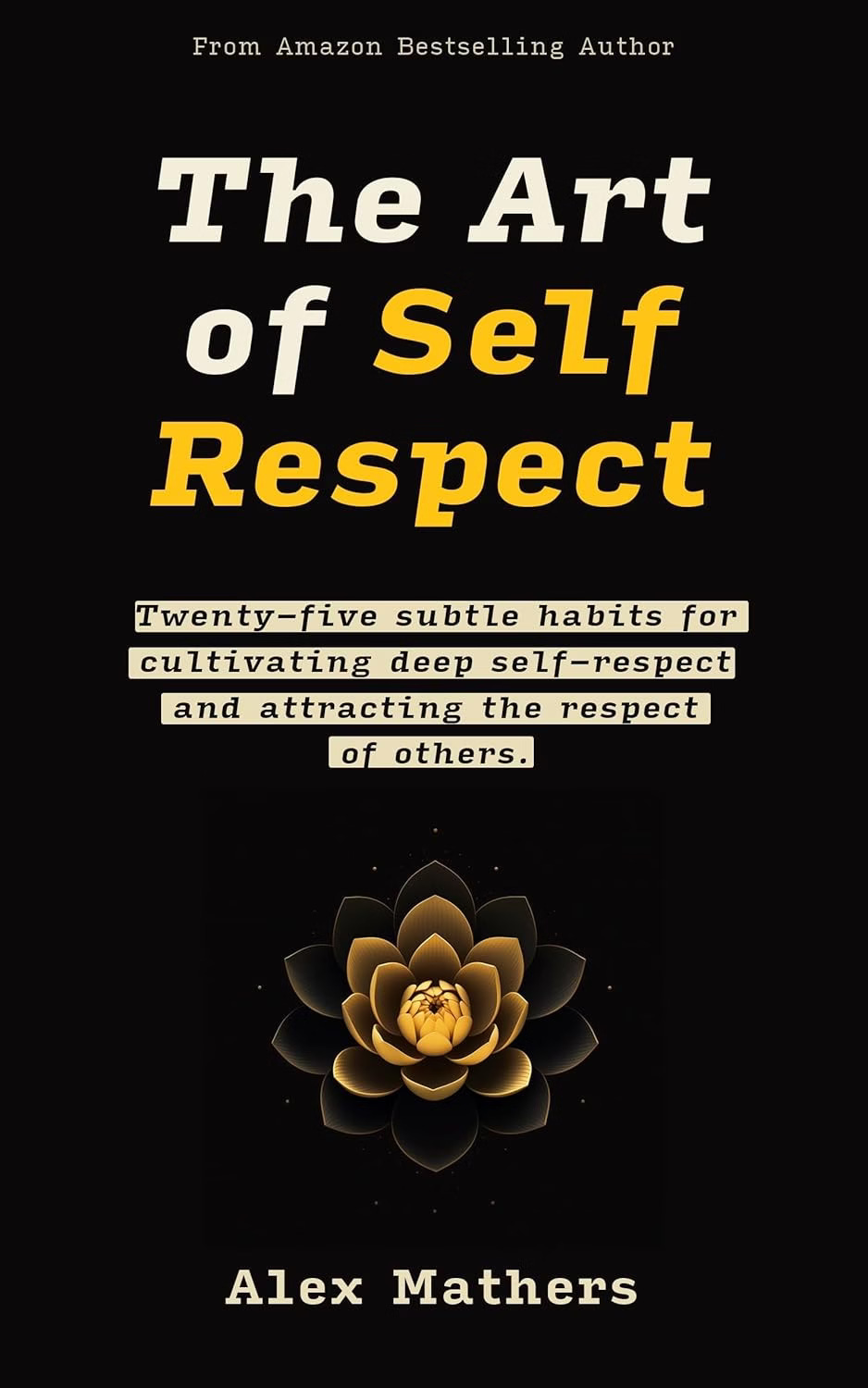
My book shows you how (comes with 3 awesome bonuses):
Get the Art of Self Respect book bundle here.
“One of the best self-help books I’ve read in a long time. Alex exposes, in a clear and concise manner, the behaviors we should study, practice, and adopt to develop better self-respect. This, in turn, leads to earning respect from others.” - Jean Pierre
—
Anger contains information, like any other emotion. Most of us carry ‘energy’ from it rather than insight.
Sadly, anger travels faster than curiosity or openness, and has become a built-in component of American culture. It’s not unusual to see it in headlines—Why You Should Be Angry at <insert political party here>.
Our national lack of emotional skills is costing us…in so many ways.