

I’m no perfect dude.
In fact, I’ve racked up a very healthy number of failures.
But for those, I’m thankful because a loss is the best way to learn.
Mistakes show us how to pivot and what to avoid in future.
Here are some of the most important ones I keep on my wall:
1. Not forgiving yourself or other people.
It may seem empowering to refuse to forgive yourself or others for what they did. But you’re the one who loses in the end.
The guilt and/or resentment will eat away at you, rendering you weak and fearful.
No matter what happened, you can forgive. It doesn’t mean you condone the event and support what they did.
It means you forgive what they did.
Everyone was doing their best given the state of their mind at the time. Forgive by seeing the compassionate side.
That will instantly take the emotional charge out of your memory of events and strengthen you.
2. Allowing two days to go by without 20 minutes+ of solid exercise.
We all know that we feel good after a good walk or a sweaty workout session.
But it’s also super easy to forget the benefit and come up with excuses to skip workouts for other ‘priorities.’
Don’t allow two days to go by without stringing together another session. The same applies to other good habits to stick to and bad habits to drop.
More than two days means you’ve officially slipped.
The momentum will begin to slide in the wrong direction, making it harder and harder to move with a purpose that strengthens you.
3. Reacting in thoughtless anger.
Responding in a rage to a perceived trigger without time to think can be embarrassing at best and devastating at worst.
You must control this aspect of your life. You’ve seen people lose their lives and careers because of this immature approach to emotional intelligence.
This differs from thoughtful and controlled aggression, which can move you forward and inspire people profoundly.
Learn to breathe when you’re angry, and do not flip out.
Meditation helps with this, as does bringing general awareness into your everyday activities.
4. Writing angry shit on the Internet.
You know what it’s like.
Someone says something you vehemently disagree with on Twitter, and you just HAVE to chime in with your put-down mini-argument.
Leave it alone.
This is always time poorly spent.
You don’t need to take the high horse.
You’ll typically end up looking childish and emotional, and you’ll be even angrier whether you get a response or not.
Leaving trollish comments can also lose you opportunities and jobs, not to mention your self-respect.
5. Indulging in bad habits as a solution to sadness.
I’m not the sort of Navy Seals drill sergeant who screams at you to quit all vices and short-term pleasures.
Have some ice cream and a Netflix binge session occasionally.
The problem I see is when we jump into unhealthy habits due to our emotional low.
For example, we can reward ourselves sometimes after a hard day’s work. But if you’re essentially self-medicating because you want to escape your sad thoughts, this is an issue.
This needs to be addressed through what I call ‘good habit bombardment.’
This means diving into so much action - whether through exercise, talking to friends, or being creative - that your sadness or frustration is suffocated.
6. Entertaining insecure thoughts for more than a few seconds.
We all know what it feels like to have anxious moments where we feed our thoughts of insecurity and self-doubt.
It makes us feel awful.
No matter how seemingly helpful worry seems, it must stop if it makes us feel low.
You must be ruthless about this.
Doubtful thinking is never time well spent. It literally makes us physically weaker and susceptible to illness. It holds us back from being and feeling confident. Doubts will inevitably arise.
But we have the power to turn away from those thoughts when they appear.
View them as suggestions from your mind.
Some thoughts are helpful, and others are not.
If it’s not, just say ‘nope’ and engage in something present, purposeful and creative.
This is a habit. It will develop your resilience and inner peace over time the more you let go.
You got this.
Want to be more lucky?
I was never lucky until my late twenties. Things changed noticeably for me then. I learned luck is more to do with self-respect than anything else.
When I learned to move past my insecure thoughts and carve a healthy and confident self-identity, luck poured into my life. It was weird, but made sense.
Learn the 25 little daily habits I use that reinforce a powerful identity of self-respect in achievable daily steps.
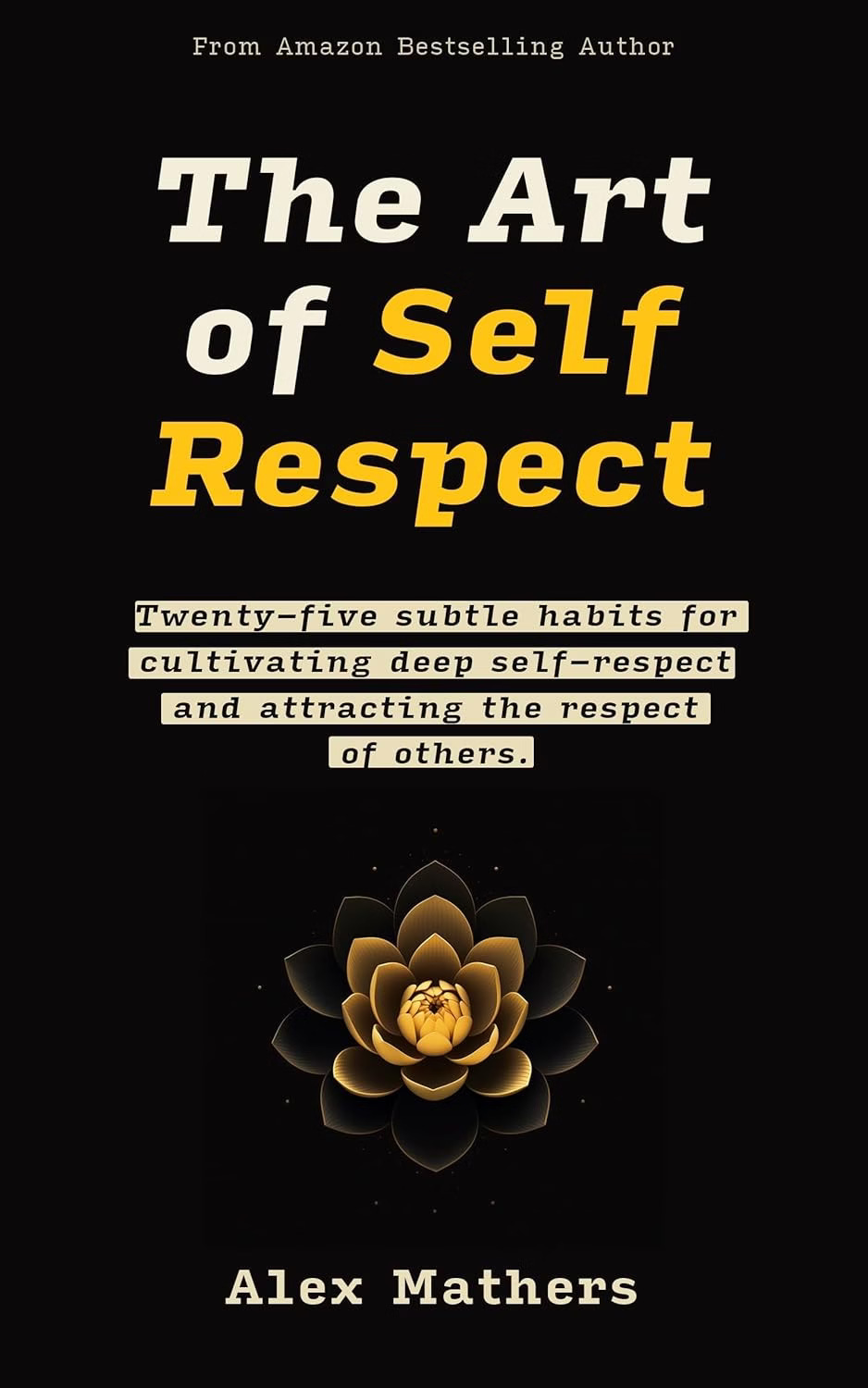
My book shows you how (comes with 3 awesome bonuses):
Get the Art of Self Respect book bundle here.
“One of the best self-help books I’ve read in a long time. Alex exposes, in a clear and concise manner, the behaviors we should study, practice, and adopt to develop better self-respect. This, in turn, leads to earning respect from others.” - Jean Pierre
—
If we remind ourselves that our time on this earth is limited, these six things even make more sense.
The lack of forgiveness is a big one. As I’ve learned more about physiology and neurophysiology lately the chemicals and their effects on our bodies have tremendous implications in our lives. Moving is essential both for our physical health, our mental health as well. Those two alone are life changing and even extending.